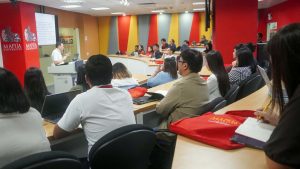
Participants in the webinar entitled “Accelerate Digital Economy for Inclusive Integration in Asia Pacific – Connecting Digital Industries in Pandemic” called for leveraging digital opportunities to build an inclusive ecosystem and promoting regional integration, which is particularly important while still combating the pandemic.
A digital economy is increasingly perceived as the way to overcome disruptions caused by COVID-19. Representatives and thought leaders from governmental, industrial and academic sectors across Asia Pacific joined a virtual conversation organized by Huawei to explore the multiple facets of digital economy, from a market, technology, inclusiveness and sustainability perspective.
Based on digital knowledge and infrastructure, the digital economy has powered a growing proportion of regional GDP and boosted resilience amid the pandemic. ASEAN predicts the digital economy will contribute 1 trillion US dollars to regional GDP by year.
Countries from the region have released future-oriented roadmaps on removing trade barriers, improving digital coverage and ensuring ubiquitous access to digital services to facilitate the implementation of the digital economy.
Being part of the ecosystem, Huawei is committed to enabling ASEAN’s Digital Masterplan 2025 in three key areas, namely ICT connectivity, talent empowerment and ecosystem incubation, according to Jay Chen, Vice President at Huawei Asia Pacific. The digital economy unfolding in the region addresses inclusive access to digital service, a landscape facilitating startup scale-up, and a circular, sustainable economy.
Dr. Alvin P. Ang from Ateneo de Manila University agreed with the openly accessible approach on upskilling public with digital knowledge. “The education system must put in context at the foundational elements of digitalization. Whether it’s in the basic education level or in the middle ages or those who are working already, trying to learn and upgrade themselves. We have to invest in them and give our rural areas an opportunity to catch up by at least providing them with the basic skills to get through the technology highway,” he said.
Huawei has long recognized the critical importance of providing everyone digital skills and leave no one behind as economies digitalize. Over the years, Huawei has launched multiple programs to train over 100,000 people with ICT empowerments in the region in cooperation with governments, universities, and NGOs. In the Philippines, during the past 4 years, more than 50 Philippine universities joined Huawei ICT Academy, over 6000 students benefited from the ICT training offered by Huawei.
Conveying the business perspective, Professor Jose Decolongon, COO & Managing Director of Corporate Foresight, Embiggen Consulting Philippines said “Micro, small, medium enterprises need to have understanding on digitalization to perceive the opportunities when it comes to exploring the digital side of the business. Challenges are faced by these enterprises but also the large organizations. It’s related to coverage and speed of digital infrastructure. This is where telecom players such as Huawei and our local players can play an important role.”
For a sustainable digital economic ecosystem, new technologies such as 5G, Internet of Things and Cloud provide great promise in terms of enhancing de-carbonization and the circular economy. In the Philippines, Huawei has increased investment in sustainable green solutions, leveraging clean power generation, electric transportation, and smart energy storage.
“The next five years could see the ASEAN region make giant strides towards becoming a digital society, and the transformation will enable member states to recover faster from the pandemic. Huawei, together with ASEAN partners, is committed to enabling the ASEAN Digital Master Plan 2025 and create new value for the leading digital community and economic bloc,” said Jay.